Industry7 min · Oct 07, 2026
Anthropic's $100M Bet: The AI Bottleneck Isn't the Model, It's Who Can Deploy It
by SolidAtoms Team
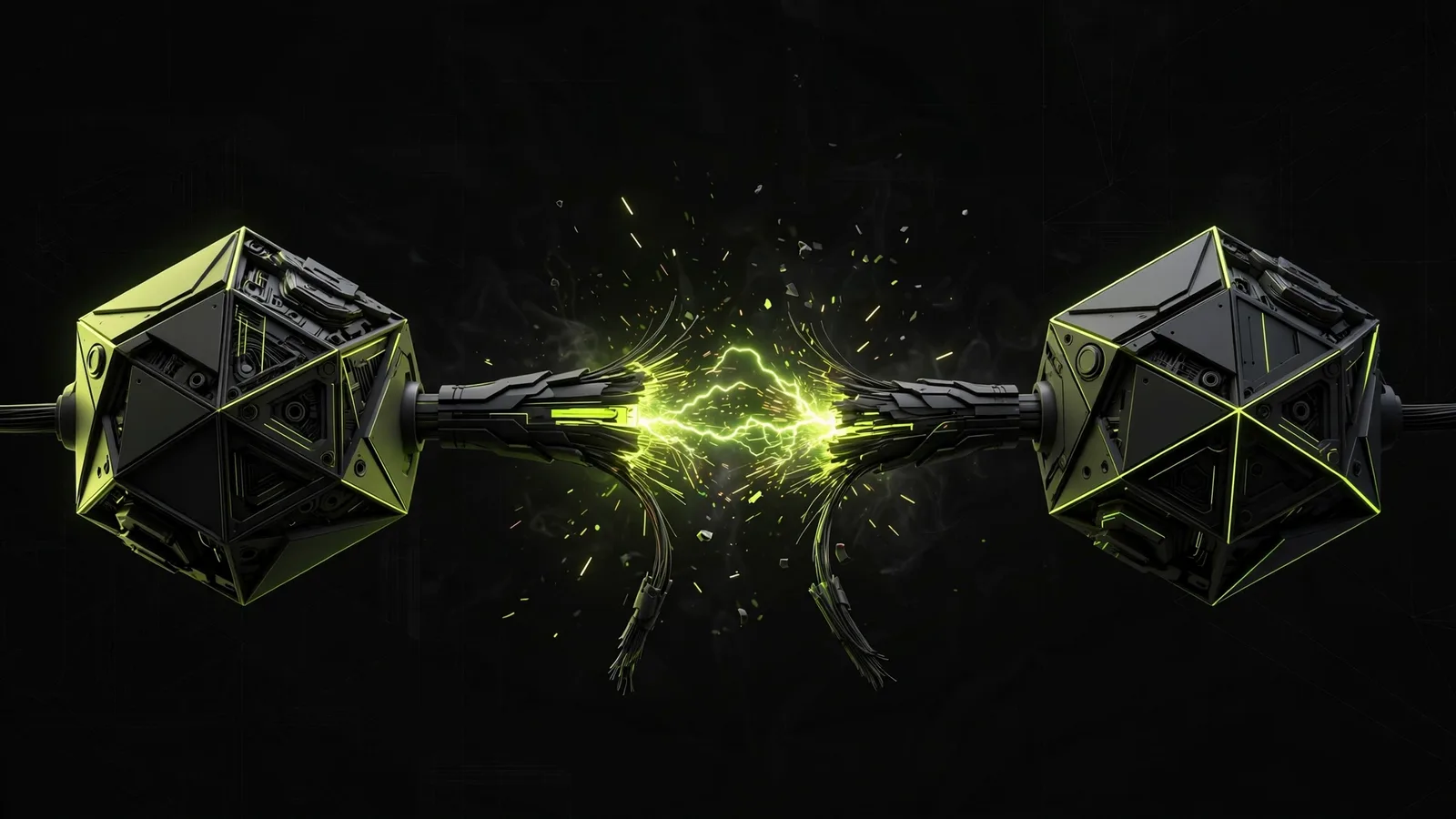
On August 14, 2026, SpaceX closed what is now the largest startup acquisition on record: a $60 billion, all-stock deal for Anysphere, the company behind Cursor. Cursor now sits inside SpaceX as a new division called SpaceXAI. Two weeks later, OpenAI announced it was walking away from the relationship entirely — not the acquisition, its own four-year partnership with Cursor. On November 12, OpenAI's models disappear from Cursor's core product.
It's a rare case of a major model provider voluntarily giving up distribution on one of the most popular AI coding tools in the world, and the reasoning OpenAI gave is worth reading closely, because it's less about competition and more about trust.
In a post titled "Our decision on Cursor following its acquisition by SpaceX," OpenAI said it had notified SpaceX that it intends to wind down its contract to supply models to Cursor, proposing November 12, 2026 as the shutoff date — the maximum notice period its contract allowed. The stated reason wasn't pricing, capacity, or a rival deal. It was a lack of confidence that SpaceX would honor OpenAI's usage terms.
OpenAI pointed to its own track record with Musk's companies: after Musk acquired Twitter (now folded into SpaceX), that company broke the terms of its OpenAI contract, and xAI — also now under the SpaceX umbrella — had separately violated OpenAI's terms of service.
In other words: this isn't about Cursor. It's about who now owns Cursor. OpenAI's post went out of its way to say it has "enormous respect" for the Cursor team and product after nearly four years of working together — the breakup is aimed at Cursor's new parent company, not the tool itself.
Here's the twist that undercuts the dramatic headlines: Cursor CEO Michael Truell said OpenAI's models account for only about 5% of Cursor's user traffic. Claude and Gemini already handle the overwhelming majority of completions and agent sessions inside the editor. For most day-to-day Cursor users, November 12 will be a non-event.
That 5% figure matters for a different reason: it's a live data point on how much leverage a single foundation model provider actually has once a coding tool becomes model-agnostic. Cursor built itself to route between Claude, GPT, and Gemini rather than lock in to one vendor, and OpenAI's exit shows what that architecture is really for — it makes the tool resilient to exactly this kind of dispute.
Reporting from CNBC, TechCrunch, and CIO lays out the practical fallout for anyone who has been leaning on GPT models inside Cursor:
OpenAI's models will no longer be available as first-party options in Cursor's chat, agent, and tab-completion features after the cutoff.
Bring-your-own-API-key access to OpenAI models will still work, but reportedly only for local chat and agent sessions — not for tab completion, which keeps running on Cursor's own models.
Developers who specifically want GPT models for coding can still reach them through OpenAI's own Codex IDE extension or through third-party AI gateways, just outside Cursor's native integration.
Teams that do depend on GPT models inside Cursor have roughly ten weeks from OpenAI's announcement to migrate workflows, prompts, and evals to Claude, Gemini, or a BYOK setup.
Zoom out and this is a preview of a problem every AI-native tool will eventually face: your product depends on API access from companies that are also, increasingly, your competitors or your competitors' owners. Cursor was already competing with OpenAI's own Codex CLI. Now Cursor is owned by SpaceX, whose founder runs xAI, a direct model competitor to OpenAI. The contract that used to paper over that conflict just ran out.
For engineering teams choosing a coding assistant today, the practical takeaway isn't "avoid Cursor." It's that model diversity at the tool layer is no longer a nice-to-have — it's the thing that determines whether a corporate acquisition three companies away from you can quietly break your workflow with ten weeks' notice. Tools like Cursor, Claude Code, Cline, and Zed that support multiple model providers or bring-your-own-key setups are structurally insulated from this kind of dispute in a way that single-vendor tools aren't.
If you're on a team currently routing production workloads through Cursor's GPT integration, the move now is straightforward: benchmark your actual prompts and agents against Claude or Gemini inside Cursor before November 12, not after, so you're not making the switch under a deadline.
Our decision on Cursor following its acquisition by SpaceX (OpenAI)
OpenAI to end model access to Cursor after acquisition by Elon Musk's SpaceX (CNBC)
Cursor customers will lose access to OpenAI coding models in November (CIO)
SpaceX to acquire Cursor for $60B in stock, days after blockbuster IPO (TechCrunch)
SpaceX Cements $60 Billion Cursor Takeover Following IPO (Bloomberg)
OpenAI Cuts Off Cursor's Model Access After SpaceX Acquisition (DevOps.com)